
In the information economy, where attention is the currency, marketers can only win their share of attention if they prove to be trustworthy

Prime Minister Malcolm Turnbull's first State visit to India is an indication of the success of India's Act East Policy, says Dr Rahul Mishra.
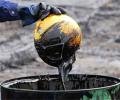
The Indian desire to deepen its ties with Vietnam, especially in the oil sector, besides defence and trade, was conveyed to the top leadership in Hanoi by External Affairs Minister Sushma Swaraj.

These ambitious projects are littered with every possible acronyms and include proposed road links, air connectivity plans, electricity grids and special economic zones on coasts, says Subhomoy Bhattacharjee.

Meet Srihari Sathe. Producer. Director. Professor.

An excerpt from Conde Nast India's Make In India magazine.
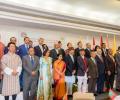
Connectivity is what SAARC needs the most but Pakistan is not interested, says Rajeev Sharma.

With a new $100-billion technology fund, SoftBank is likely to go after market leaders.

'Notwithstanding the realisation among the Indian leadership to build up its navy for the force's expanding role, the Indian Navy was allocated only 15% of the interim defence budget presented in Parliament in February 2019.' 'The outlay for the navy's capital acquisition is not even adequate to meet its committed liabilities,' points out Brigadier S K Chatterji (retd).

'There are major implications for India. Though there was a transparently thin attempt to project the troop reduction as intended to promote peace, the downsizing is actually part of plans to streamline and strengthen the PLA, capable of defending China's national interests at home and abroad,' says Jayadev Ranade.

We're behaving like frogs in warm water. We swim around untroubled, cooled by our faith in Indian liberal democracy. We are blind to the bubbles popping around us, the bubbles warning of fundamental changes, says Mihir S Sharma.

'By the time he came out after nearly five hours, he had a one-to-one conversation with the President, a delegation-level meeting, a reception, a dinner, a tour of the White House and a joint statement of a kind none of his predecessors ever had,' says Ambassador T P Sreenivasan.

'India was in no position to wage another war in 1965, having suffered a morale-shattering defeat in 1962. The three services were in the middle of a modernisation and expansion phase and therefore not fully trained or battle-ready.'

Reflecting the strong bipartisan support to the India-US relationship, the lawmakers welcomed the decision of the House Speaker Paul Ryan to invite Modi to address the joint meeting.
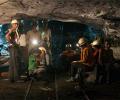
'Greenpeace has been brutal in targeting both India and the Manmohan Singh government. The push to go after Indian coal is driven by its long-term agenda. What is surprising is that China has not been meted out the same treatment, despite the fact that the rise of China as an economic power has been built around generating power from coal. 'Being richer and more affluent, yet far less democratic, there is less room for an NGO such as Greenpeace to drive home a complicated global agenda, so there is more of a tendency to go along with anything the Chinese offer despite China being the biggest by far with regard to coal use. But for India, it reserves tougher prescriptions, notably for its middle class, says Srinivas Bharadwaj.

'Jin Jiang had invested in Louvre Hotels.' 'Louvre, a couple of months ago, took a majority in Sarovar hotels.' 'So they are coming in now.' 'Look at the Chinese -- two quarters ago they took 25 percent in Hilton.' And then HNA also took majority in Carlson (Radisson).'

How will China deal with Taiwan's first woman president? Srikanth Kondapalli explains the significance of a historic election.
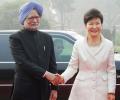
South Korean President Park Geun-hye's visit to India will enhance economic and military ties between the two countries and give the relationship a strategic dimension, says Jiye Kim.
